Wildhouse Publishing is building its in-house resources while it uses outside contractors to prepare publications. If you are interested in working with Wildhouse Publishing, please reach out to us using the Contact form.

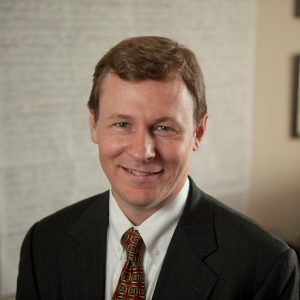
Wesley is a professor at Boston University and Executive Director of the Center for Mind and Culture in Boston. An accomplished author with a strong desire to communicate to popular as well as academic audiences, he has great hopes for Wildhouse Publishing. For more information, see here.
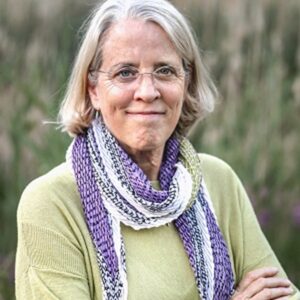
Suzanne has twin masters degrees in film/screenwriting and religion/spirituality, and has become expert in the rapidly changing landscape of 21st-century religious institutions. She regularly publishes essays, has founded two grant-funded digital start-ups exploring the intersection of social media and faith, and works with a therapy dog, Maestro. For more information, see here.
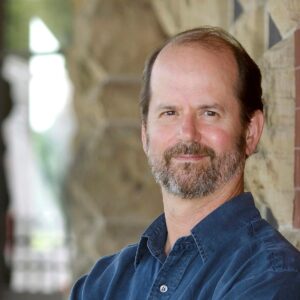
Mark is a veteran poet, retreat leader, scholar. and teacher. Author of numerous books of poetry, a winner of the Wytter Bynner Prize in Poetry, and recipient of numerous nominations for a Pushcart Prize, his poems express the spiritual profundity of nature and its manifold intersections with the existential intensities of human life. For more information, see here.
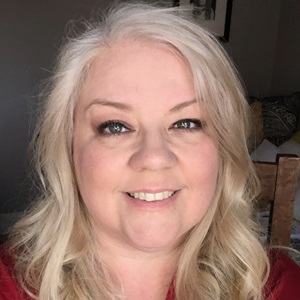
Rebecca Johns grew up in the Illinois countryside wanting to see the world. Instead, she moved to Missouri for college, then to New York City, where she worked for a time as a magazine editor for Highlights for Children and Woman’s Day magazines and a copywriter for Penguin USA. Eventually she left publishing to attend the Iowa Writers’ Workshop, where she wrote her first novel, Icebergs, a PEN/Hemingway Finalist. Her second novel, The Countess, has been to more countries than she has: ten, by last count. In her spare time, she is Associate Professor of English at DePaul University in Chicago. For more information, see here.
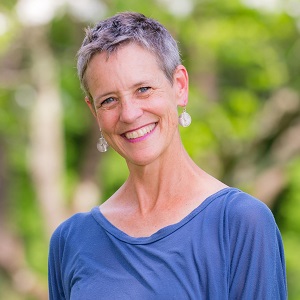
Gallaudet Howard has worked as an editor, teacher, and family nurse practitioner in a variety of settings including the Pine Ridge Reservation, the Indian Himalayas, and schools and clinics near Boston. She is also a writer who has published work in The Times of India, America, Alpinist, and Salon. She loves working with writers to help them realize their visions and bring their stories to life, both fiction and nonfiction.
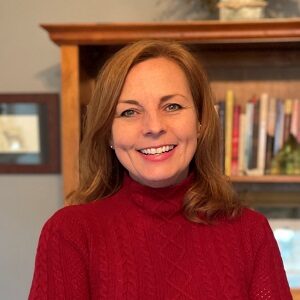
Kate is an interfaith, interspiritual, interdisciplinary writer, editor, and community builder. She began her editorial career in the academic press and now enjoys working with leading-edge spiritual writers from all traditions and non-traditions, especially those with mystical or contemplative depth. She serves on several boards, including the United Religions Initiative and Contemplative Outreach. For more information, see here

Melody is a visual designer with fifteen years of experience in graphic design, web design, and visual communications. She has designed and produced dozens of books and is herself an author (Brave Talk, 2020). Melody is a firm believer in the power of books to expand our souls and make the world a better place. For more information, see here.
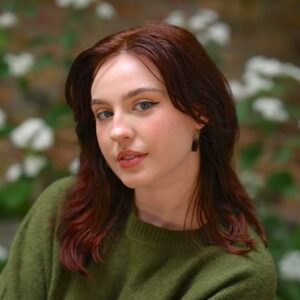
Ava was born and raised in Cleveland, Ohio, and attended DePaul University in Chicago, Illinois from 2018-2024 for both her Bachelor’s and Master’s of Fine Arts degrees. She has experience in print, audio, and video publications, and aims to bring a multimedia approach to her publicity campaigns at Wildhouse. With a background in journalism, Ava is eager to share the stories of our authors on a broad scale. She is looking forward to connecting with you, and letting the world know why your stories are unique, incredible, and adventurous.
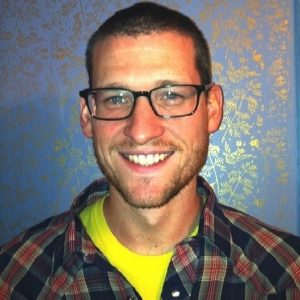
Dave has a PhD in religious studies and a masters degree in philosophy and theology. He is a gifted writer and editor with a great way of working with people of all kinds. Dave is direct and constructive in his advice, and skillful in solving copyediting challenges. Everyone who works with him gets better. For more information, see here.
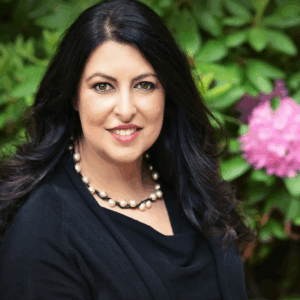
Wildhouse Fiction is supported by a gifted editorial advisory board. Board members advise the imprint on strategic directions and potential publications. Each member of the board understands a part of the network of target audiences: post-religious people, spiritual but not religious people, spiritual atheists and agnostics and nones, mystical and marginal or unorthodox religious people, and others for whom traditional spiritual resources are too narrow or just don’t fit. Their perspectives on this complex audience are critically important for strategic planning for Wildhouse Fiction.

Michelle holds a BA in English Literature from the University of Pennsylvania, a JD from Columbia Law School, and an MFA in Fiction Writing from the Iowa Writers' Workshop. She teaches legal writing at Northwestern Pritzker School of Law and is the author of four novels: How to Pack for the End of the World, Questions I Want to Ask You, Pushing Perfect, and Playlist for the Dead, along with various short stories, essays, and book reviews.
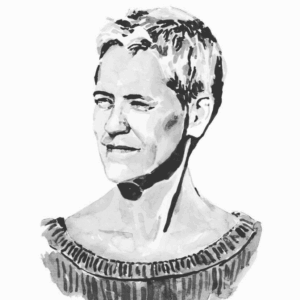
Gallaudet holds a BA in English Literature from Harvard, an MSN from Yale, and an MFA from the Iowa Writers’ Workshop. She lives in Massachusetts, where she works as a Family Nurse Practitioner at Lynn Community Health Center and a teacher at Waring School. Her writing has been published in The Times of India, Alpinist, America, and Salon.
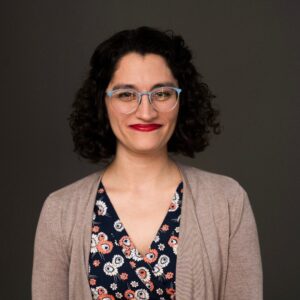
Emily grew up in rural Illinois and moved to Chicago to attend DePaul University. There, she became passionate about interfaith dialogue and Catholic social teachings and earned a BA in Catholic Studies. She worked for ten years in social justice ministry with youth and college students, and she recently completed her MA in Writing and Publishing at DePaul University. She brings the eye of a poet and the empathy of mother to her editing work.
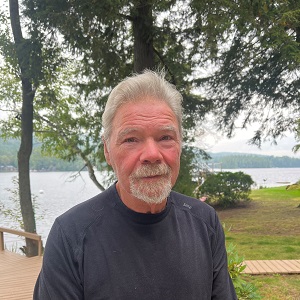
The Wildhouse Poetry imprint is supported by an editorial advisory board consisting of gifted and visionary poets and publishers of poetry. Board members advise the imprint on strategic directions and potential poetry publications. Each member of the board understands a part of the network of target audiences: post-religious people, spiritual but not religious people, spiritual atheists and agnostics and nones, mystical and marginal or unorthodox religious people, and others for whom traditional spiritual resources are too narrow or just don’t fit. Their perspectives on this complex audience are critically important for strategic planning within Wildhouse Poetry.
“The work of writing helps me attend to a world I love but did not create. It is an act of soul-making that arises out of the need for the real work of our lives: the work we do not to acquire things but to be to belong. I believe great poems allow us to be more vividly, if only for moments.”
Robert Cording is professor emeritus at the College of the Holy Cross in Worcester, MA, where he taught for 38 years where he held the Barrett Chair of English and Creative Writing. Since then, he worked for five years as a poetry mentor in the Seattle Pacific University low residency MFA program. He has published ten collections of poems. Without My Asking which, along with Walking with Ruskin, were finalists for the Connecticut Book Award. A book on “poetry, metaphor, and mystery” Finding the World’s Fullness, was recently published by Slant, and his most recent book of poetry, In the Unwalled City, was published in 2022. He has received two NEA grants in poetry, two poetry fellowships from the state of Connecticut, and has won two Pushcart Prizes in poetry. His poems have appeared in many publications, including Georgia Review, Image, The Sun, Southern Review, Poetry, Hudson Review, Kenyon Review, Spiritus, The New Yorker, The Common, Agni, New Ohio Review, and Orion, and have been included in a variety of anthologies, among them: Best American Poetry, 2018; Best Spiritual Writing (1999, 2000, 2001, 2004, 2005, 2007, 2010); Poetry Magazine Anthology; Godine: Poets of the New Century; Milkweed: Urban Nature. For more information, see here.
“Poetry is the porous container of almost-unholdable things—the impossible, the paradox, the infinite, the infinitesimally small. Poetry is the bridge between what we see and don’t, between what we long for and the ordinary realities which surround us, between deepest human interiors and endlessly vibrant and complicated exteriors in the natural world. Poetry brings us into contact with the other, and with the One, in boundless ways.”
Laura Reece Hogan is the author of Butterfly Nebula (Backwaters, University of Nebraska Press, forthcoming 2023), winner of the Backwaters Prize in Poetry; Litany of Flights (Paraclete Press, 2020), winner of the Paraclete Poetry Prize; the chapbook O Garden-Dweller (Finishing Line Press); and the nonfiction spiritual theology book I Live, No Longer I (Wipf & Stock). Her poems have appeared in or are forthcoming in Sugar House Review, America Magazine, Scientific American, Spiritus, Verse Daily, RHINO, Sojourners, Connecticut River Review, EcoTheo Review, The Christian Century, Psaltery & Lyre, and elsewhere. For more information, see here.
“I believe poets are today’s prophets, pointing us towards truths we wouldn’t know without their words. A good poem slows me down and helps me pay better attention to the world around me. It’s a grace I need and treasure.”
The Rev. Dr. Teri McDowell Ott is Editor/Publisher of The Presbyterian Outlook, leading its mission to foster thoughtful, courageous conversations in the church and beyond. An ordained Presbyterian minister, she has served in pastoral roles and as Dean of the Chapel at Monmouth College, IL. Her book, Necessary Risks: Challenges Privileged People Need to Face, grew out of her work with college students and volunteer teaching in a men’s prison. For more information, see here.
“I write poems in response to encounters—sometimes pleasing, sometimes troubling—with inner and outer phenomena. I ask more questions than I answer. Poetry, along with music and visual art, has an uncanny ability to tolerate, and even celebrate, unanswerable questions. Because poems are both literal and associative, both abstract and concrete, they are able to engage the whole person—our cerebral and psycho/emotional selves. Such engagement inspires me, calms me, enables me to be more fully in relation to myself and to the world.”
Recently retired from almost two decades of teaching at the Maryland Institute College of Art, Jennifer taught creative writing & critical thinking, and co-taught an art history/ecology course. She has also taught at senior centers, prisons, and mental health facilities among other community settings. Her poems, essays and photographs have appeared in poetry collections, artists books, exhibition catalogs, galleries, museums, anthologies and literary journals. A past poetry editor for The Cortland Review, she has published six collections of poems, most recently Raising the Sparks (Paraclete Press, 2022). For more information, see here.
The nonfiction imprints at Wildhouse Publishing are supported by a diverse, multi-generational editorial advisory board. Board members advise Wildhouse Publications and Wildhouse Crossings on strategic directions and potential publications. Each member of the board understands a part of the network of target audiences: post-religious people, spiritual but not religious people, spiritual atheists and agnostics and nones, mystical and marginal or unorthodox religious people, and others for whom traditional spiritual resources are too narrow or just don’t fit. Their perspectives on this complex audience are critically important for strategic planning within the nonfiction imprints.

Ben is a PhD candidate in Philosophy of Religion at Boston University. His research explores ritual and esotericism within online communities with the aim of developing popular and philosophical resources for understanding magical, religious, and mystical practices as constructive endogenous features (not bugs) of digital milieux. He works on and off as a writing instructor, freelance photographer, and copy editor and is an avid reader, birdwatcher, and metalhead in his spare time. For more information, see here.
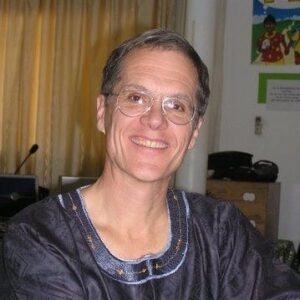
David Blair has worked in New Hampshire as a teacher and museum director, and overseas in international development and conflict transformation. He has two Masters degrees in education and is completing a third in theology at Boston University. The intersection between culture and nature fascinates him. He looks forward to learning more about the many ways humans find and express their spiritual path. For more information, see here.
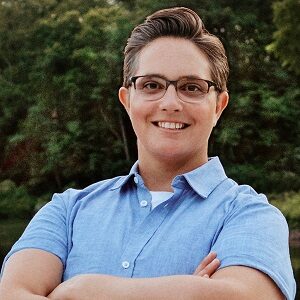
Kate is a Visiting Professor of Practical Theology at Methodist Theological School in Ohio and Louisville Institute scholar. Her work intersects feminist and queer theologies, biblical studies, design thinking, and theopoetics. Kate is also a graphic designer with over 15 years of experience, and she integrates design thinking into her research and teaching. She is currently working on two books: Undoing Conquest: How a New History of Ancient Israel can Reshape Christianity and Imagining Utopia: A Queer Feminist Vision of Church. For more information, see here.
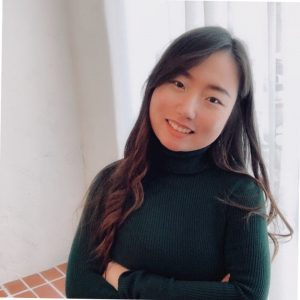
Xiaodi is a Master’s of Divinity student at Boston University School of Theology. Before joining BU, Xiaodi earned her two business degrees in Finance and Marketing, and has worked in three countries: China, South Korea and the United States. She is a global citizen, a cross cultural people person and a lifelong spiritual seeker. For more information, see here.
Thank you to the talented people who have served on WHP’s various editorial advisory boards!
Christopher Bennett, Raja Gopal Bhattar, Jill Braithwaite, Geoff Boyce, Saikou Y. Diallo, Kathryn Dickel, Ursula Goodenough, William David Hart, Shaunesse’ Jacobs, Diane Clark Johnson, Lucas F. Johnson, Christopher Lee, Wade Mitchel, Dann Ott, Anthony Pinn, Emily Qureshi-Hurst, Philip Reed-Butler, Austin Roberts, F. LeRon Shults, Jeffrey Speaks, Seth Villegas, Carol Wayne White, Demian Wheeler